

The Symbolism Behind Shades of Indus
A study in colour, craft and civilisation.
Long before the modern gentleman curated his wardrobe with intention, there existed a civilisation that understood proportion, material and quiet refinement. The Indus Valley Civilisation was not merely advanced in its urban planning and trade but it also possessed a sophisticated visual language. Earth, mineral, foliage and metal were not decorative afterthoughts, they were central to identity and ritual.
Shades of Indus is our interpretation of that restraint. Each linen shirt draws from a material memory of the Indus, rendered in sun-baked tones, woven in the finest European linen yarns and designed for the modern-day gentleman who values depth over display.

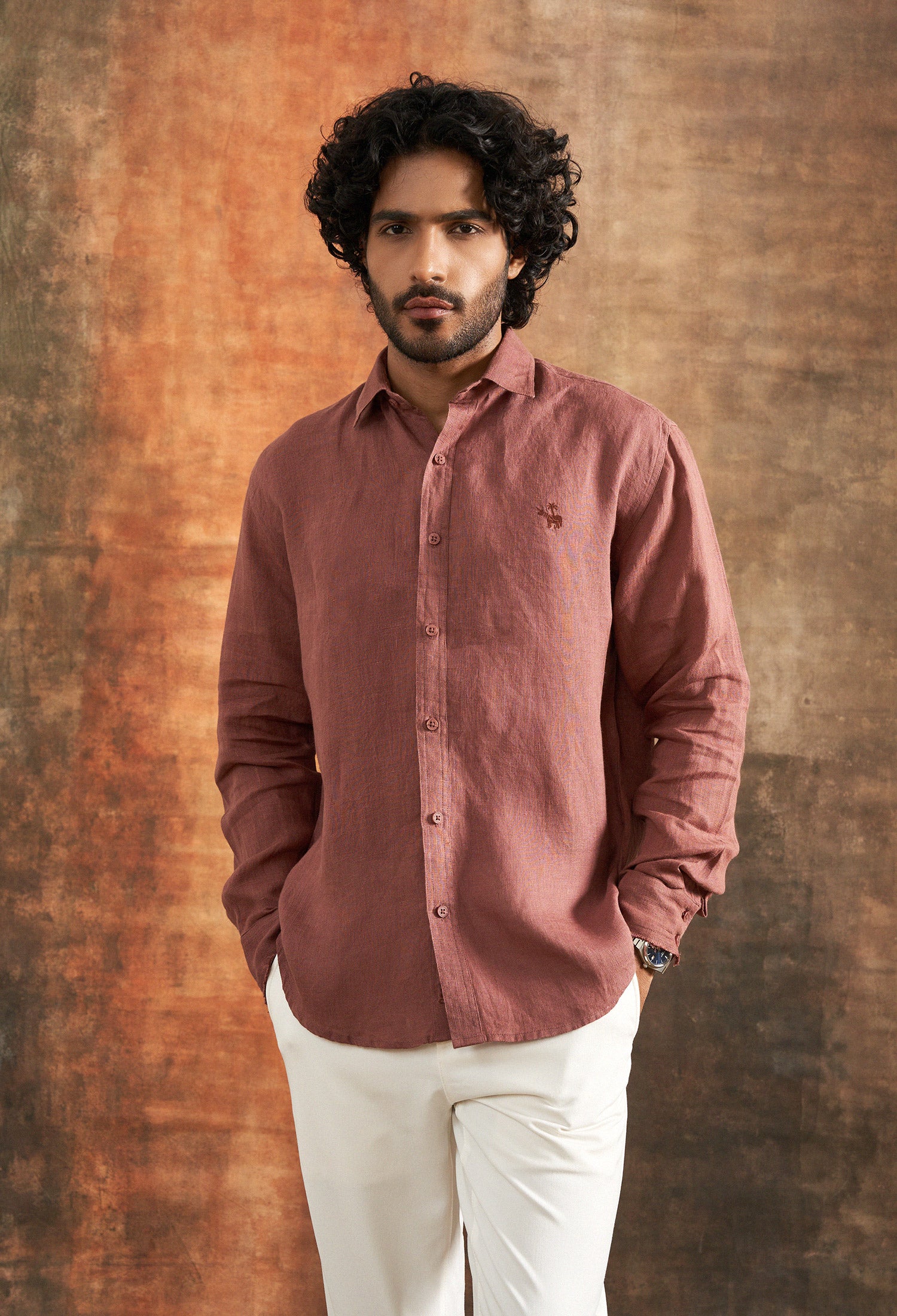
Sacred Fig
The fig tree has long symbolised nourishment, wisdom and continuity. In ancient settlements, fruit-bearing trees were not ornamental; they were life-sustaining presences. Sacred Fig takes its cue from the muted blush found within a perfectly ripened fig.
This is not a seasonal pink. It is a grounded, sun-softened hue that carries warmth without excess. In linen, it feels breathable and assured, an elegant alternative to conventional neutrals.
Symbolism: Abundance. Renewal. A quiet strength rooted in nature.

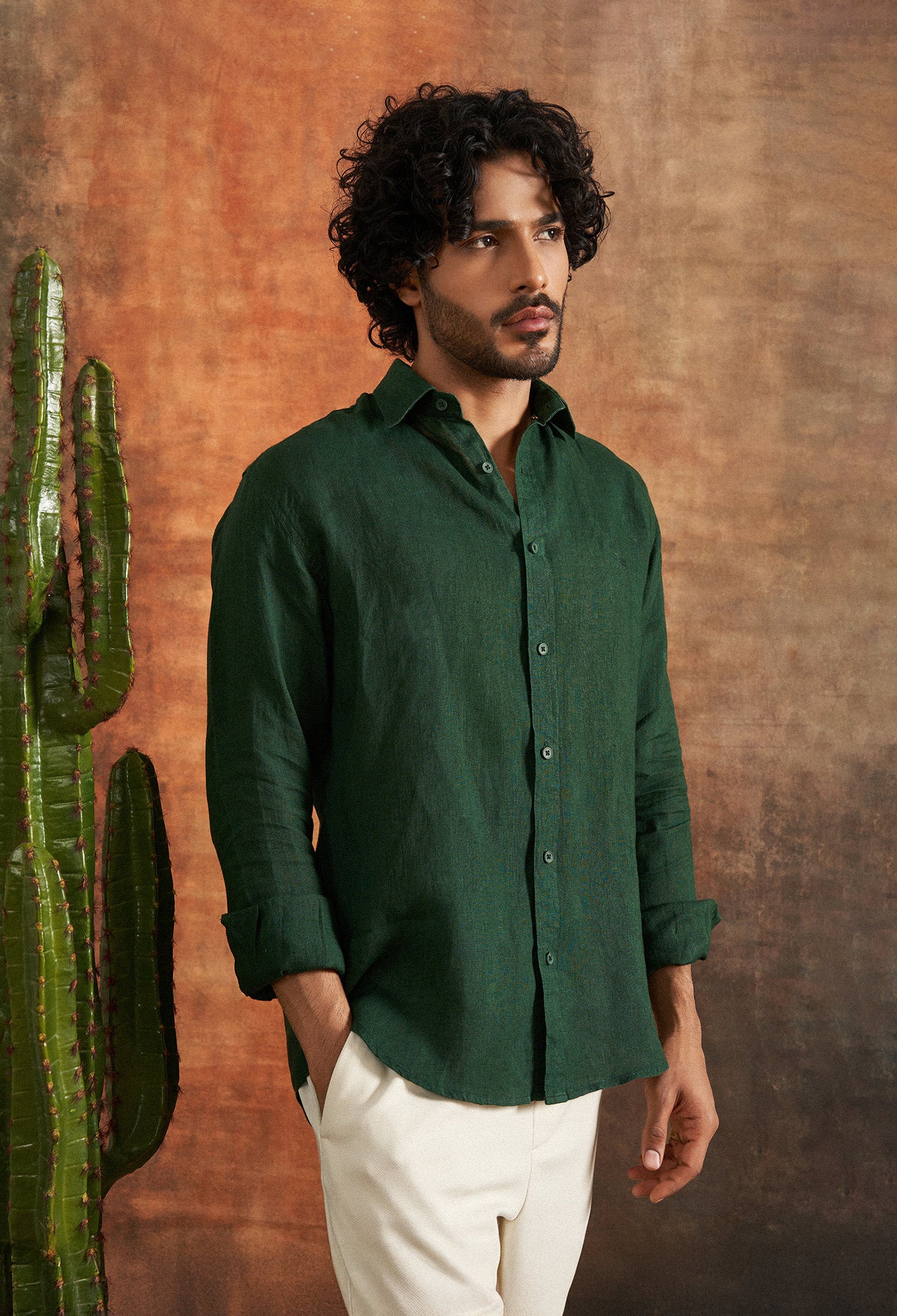
Vata Green
The banyan, Vata in Sanskrit, stands as a symbol of longevity and shelter. Its expansive canopy and aerial roots create ecosystems of their own, offering refuge and resilience.
Vata Green mirrors this living architecture. The tone is neither emerald nor olive; it is a cultivated green that is balanced, intelligent, deeply wearable. It carries the calm of shade on a warm afternoon.
Symbolism: Stability. Protection. Enduring legacy.

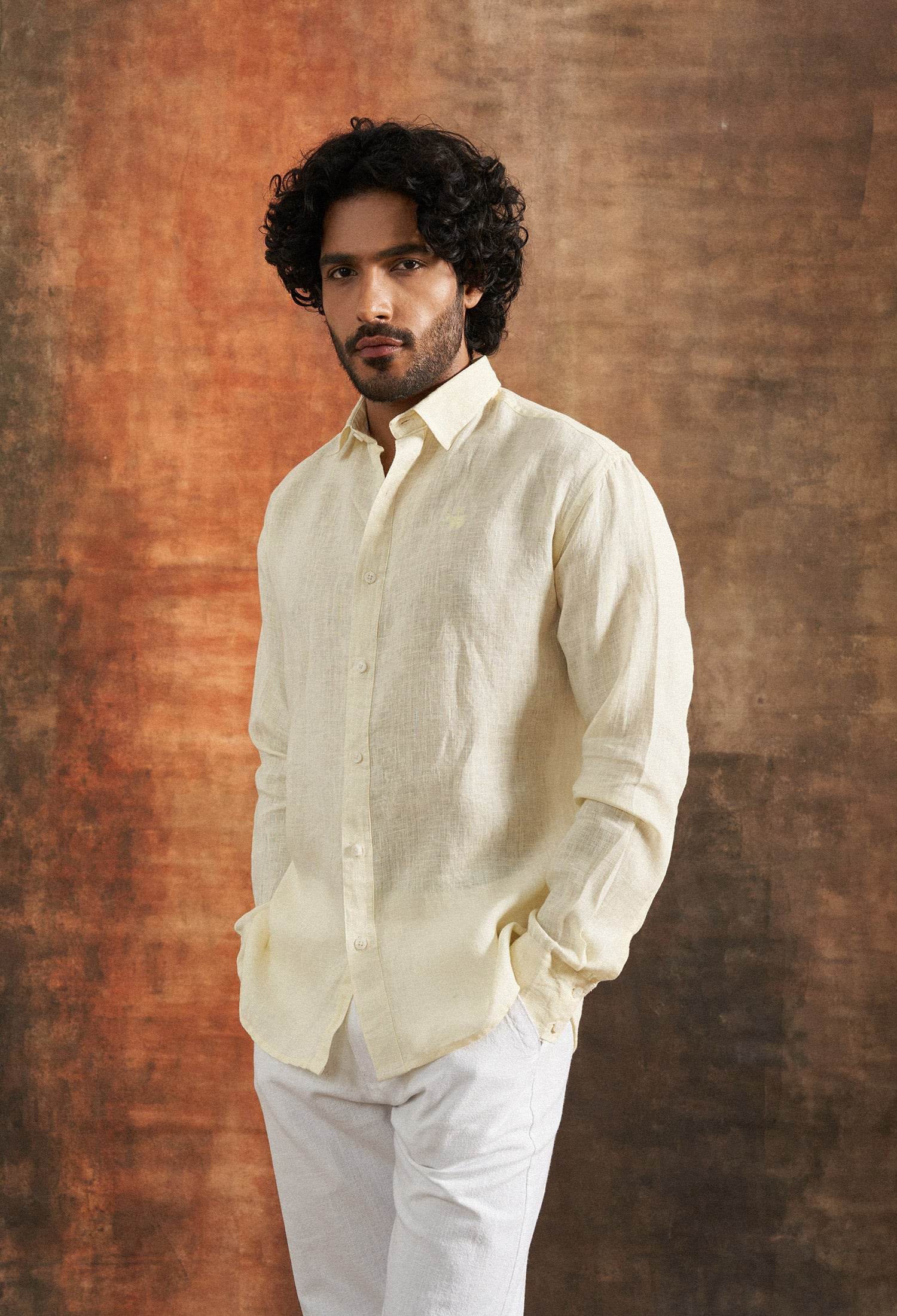
Ivory Relic
Excavations from Indus sites reveal intricately carved objects like combs, inlays and decorative pieces crafted with extraordinary precision. Their tones were never stark white; time softened them into warm ivory.
Ivory Relic honours that patina. It is a softened and refined off-white. In linen, it allows the weave to breathe, revealing subtle texture in natural light.
Symbolism: Craftsmanship. Purity of intention. Timelessness shaped by hand.

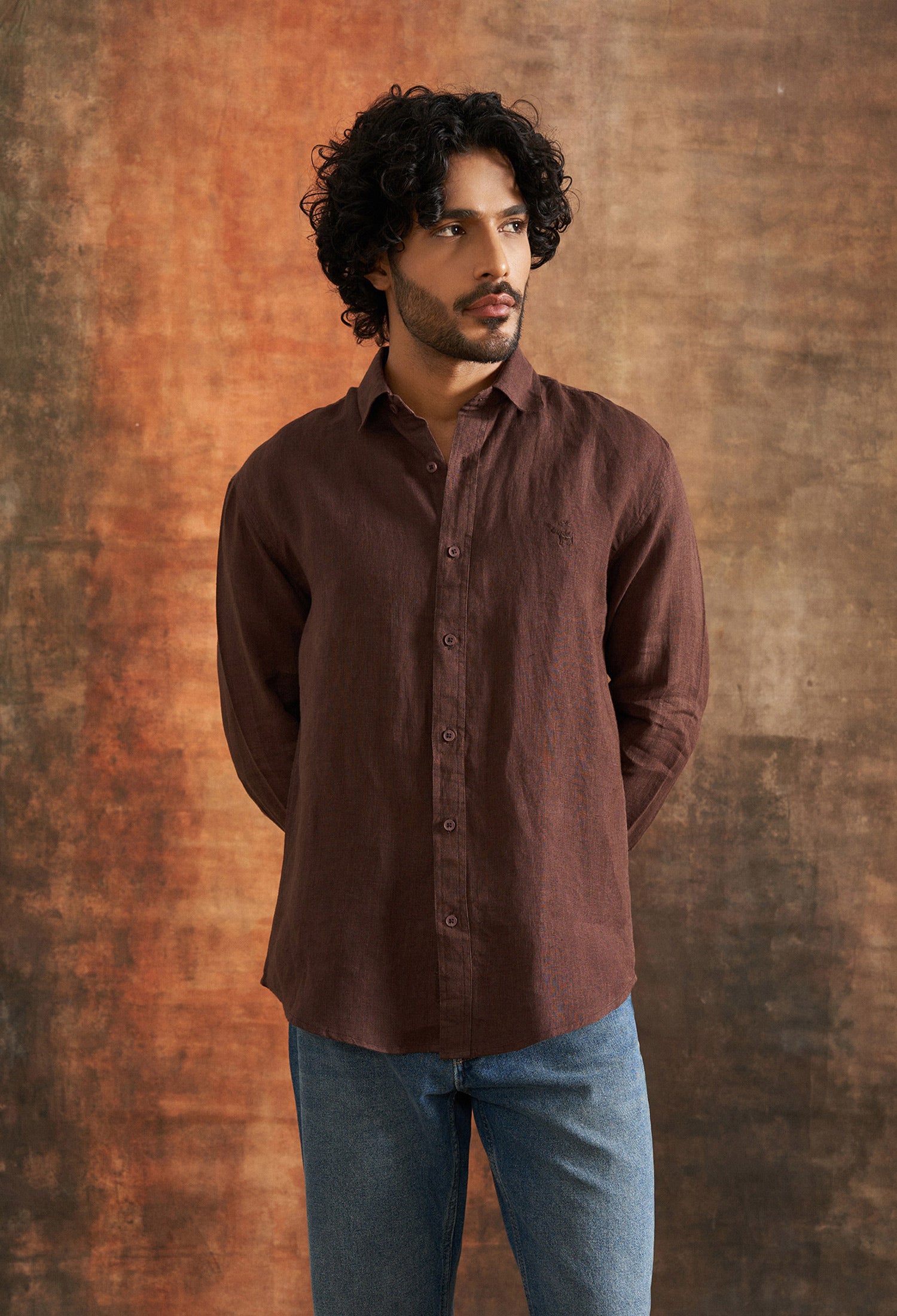
Jasper Stone
Jasper, often used in beads and ornamentation, held both decorative and symbolic value in ancient trade networks. Its earthy brown carries the weight of terrain and time.
Jasper Stone translates that mineral richness into fabric. The hue is steady and reassuring, an elevated brown that speaks of soil, pottery and carved seals.
Symbolism: Groundedness. Integrity. The strength of the earth itself.

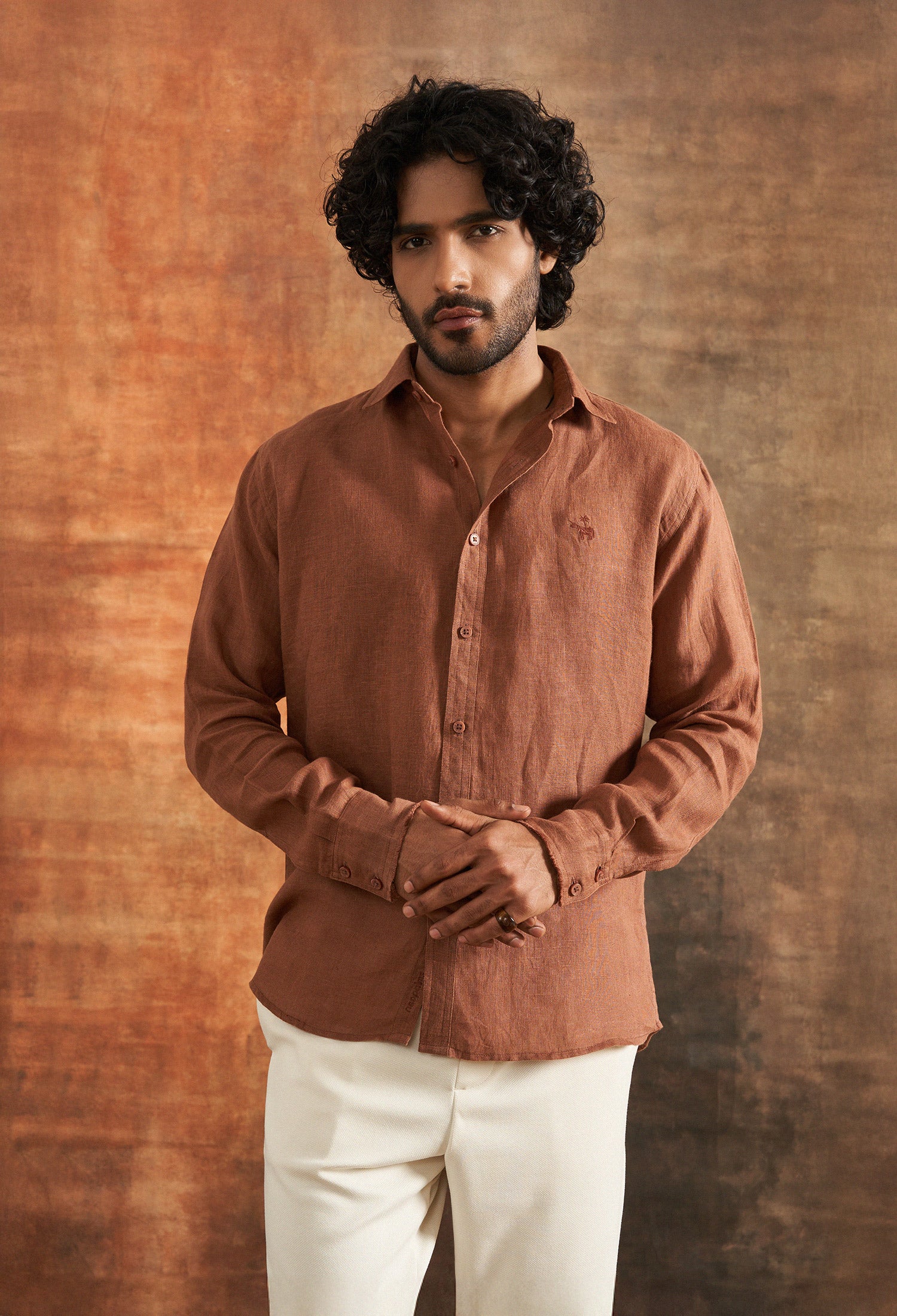
Aged Copper
The Indus civilization thrived in the Bronze Age. Its artisans shaping copper into tools, vessels and ornaments that travelled across regions. Over time, copper develops a complex surface which is warm, burnished, dignified.
Aged Copper captures that restrained gleam. It is neither bright nor brash. Instead, it reflects maturity and quiet authority.
Symbolism: Craft. Evolution. The beauty of material shaped by time.
More Than Colour
Shades of Indus is not a costume. It is a conversation between past and present, earth and fabric, civilisation and the contemporary wardrobe.
Each shirt is woven from premium European linen yarns, chosen for breathability, longevity and texture. Designed to be lived in through summer and beyond, these are pieces that age gracefully, much like the artefacts that inspired them.